Knabe’s Corner

Dispatches from the Supervisor

Tragedy Brings Out the Best of the American Spirit

Twenty-five years ago … 10 years ago… it has been a time of remembrance here in the Fourth District and across our nation.

Last Wednesday, we held a memorial ceremony to commemorate the 25th anniversary of the Cerritos Air Disaster. I was the Mayor of Cerritos at the time, and the horrific images and life-changing experiences of that day will stay with me forever.

Now, we are only a few days away from the 10th Anniversary of the September 11th attacks. The memories of 9/11, like those of the Cerritos Air Disaster, will remain with me forever.

We all remember exactly where we were and what we were doing when we heard the news.

I was on my way to the airport, headed to Washington D.C. for one of our Board of Supervisors’ lobbying trips. Two of my colleagues were already there, and former Supervisor Yvonne Burke and I were supposed to be on the same plane.

Then we got the call. New York, Washington, D.C., and Pennsylvania were under attack.  Our flight was canceled and we immediately headed to the County’s Emergency Operations Center, where we spent the rest of the day coordinating with emergency officials around Los Angeles County.  The following day, we were scheduled to be in meetings at the Pentagon, not too far from where Flight 77 struck.

In the aftermath of the attacks, we grieved and we felt the loss of our fellow Americans … average citizens and first responders. The pain and suffering, and the sense of vulnerability, was unlike anything most Americans had ever felt.

The shock of 9/11 changed America and the world forever. We moved into a post 9/11 world, with a global war on terror, new airport security measures and increased travel restrictions.  Our nation adjusted its focus and our daily lives changed.

While the immediate response to the Cerritos Air Disaster and 9/11 was the necessary clean-up and efforts to return to some sense of normalcy, for the families and loved ones of those who died, normal life was forever altered.  In the years that have passed, many of us have experienced weddings, graduations, and the births of grandchildren.  We grieve for those who never experienced such joy, and recognize the on-going pain for those left behind, unable to share these special memories with those most important to them.

While there are many heroes of 9/11, over the course of the last 10 years, thousands of Americans have sacrificed their lives because of what occurred that day.  While we go about our daily routines, we cannot forget our troops, who put themselves in harm’s way around the world, fighting to preserve our freedom and ensure we never again face the horrors of that day.

The experience of tragedy in our local community and our country has shown us the best of the American spirit.  While we may argue about how to tackle the challenges we face, we always come together in times of crisis as one nation. As we remember 9/11, I encourage you to share that spirit of America by flying our great flag.

May we never forget the lives we lost, the victim’s families and loved ones, and the men and women who fight to keep us safe.

God bless our troops, and God bless the United States of America.
Redistricting: Moving Past Racial Politics and Partisanship

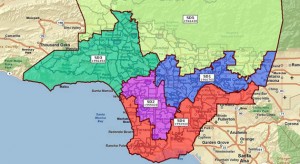
This week, the Board of Supervisors began its review of the Plan A2 Redistricting Map, which was approved by the Boundary Review Committee.  Let me start by saying:  Wow!  I want to thank all of you who took the time to come downtown to testify.  I know it was a long day for many of you.

As we have been discussing and was certainly evident on Tuesday, the Fourth District is the most vulnerable to dramatic changes.  Under another alternative discussed, over 1 million residents would be shifted into or out of our district.  As many of you said, that will destroy the connections and relationships we have built over decades.

Some of the discussion and news coverage have turned redistricting into a racial divide.  But they are getting the story wrong; it’s not about race.  The Fourth District is the most diverse in the County, with Whites, Latinos, Asian-Americans, African-Americans and many other minority groups. Under the plan I submitted on Tuesday, Latinos represent the largest population at 43% of our district.  I have always welcomed diversity in our district and loved getting to know the many cultures we have in our communities.  My staff and I have worked hard to gain your trust, learn your issues and be as responsive as we can be.

While I really appreciate the very kind words that were said at the hearing, it’s also not about me.  It’s about you and your neighborhoods, communities and cities.  You’ve been loud and clear that you do not want to be moved, and I agree with you.  I can’t support splitting up longstanding communities of interest just because some lawyers say we might get sued.

In fact, the County’s independent legal counsel has determined that Plan A2 clearly meets the County’s obligations under the Voting Rights Act.  As such, any dramatic changes are unnecessary and undeserved.  We’ve heard a clear message from all of you that have come down and testified and written nearly 1500 letters that you don’t want to be needlessly reassigned to different districts.  We should respect those wishes and side with the people of Los Angeles County.

Our next review meeting is September 6th.  It is my hope that we will move past the racial politics and partisanship and focus on what you elected us to do: solve problems and help those in need.

As always, thank you so much for your support!

Redistricting: We’re Not Out of the Woods Yet

Next Tuesday, County redistricting comes before the Board of Supervisors for our review.

I know that many of you have been very active throughout this process, attending the Boundary Review Committee meetings and sending in over 1,000 letters, which had a tremendous impact. However, we must keep the momentum going, as we head into the final phase of review.

After the BRC reviewed 19 plans, we’re basically down to two. The BRC approved Plan A2 and is submitting it to the Board. Another plan, Plan S1, will also likely be addressed.

You’ll be hearing a lot about these plans and the differences are enormous:

Under Plan A2, only about 150,000 residents county-wide would be shifted to a new Supervisorial District. Here in the Fourth, we would absorb the city of Santa Fe Springs, and the unincorporated areas of South Whittier and the remainder of Rowland Heights. This is the least disruptive plan, and respects the wishes of the people we serve. If there’s one thing made clear by the public testimony at the BRC and in the many letters and emails we’ve received, it’s that our residents want to preserve the current district boundaries as much as possible.

Plan S1 is dramatically different – it would shift over 1 million people into or out of the Fourth district alone, and displace nearly 3½ million people across the County. Geographically, communities from Marina del Rey through Long Beach would be moved out of the Fourth district.

The stated purpose of Plan S1 is to create a second Latino district. Let me be very clear about this: Los Angeles County is the most racially diverse County in the nation, and I am proud to represent a district that currently has a majority Latino population, as well as Asians, Whites, African-Americans and several other minority populations. In fact, under the A2 Plan I support, the Latino population would grow to over 42% of our residents. I’m also proud of all that we have been able to accomplish for the various geographies and demographics that make up our district.

Next Tuesday, August 9th, the Board begins our formal review. We must reach an agreement, or the responsibility for drawing the boundaries will go to the three County-wide elected officials, the Sheriff, District Attorney and Assessor, which is something all of us want to avoid.

The path forward will require the word of the season – compromise! I know that the supporters of Plan S1 will be very vocal and may threaten a lawsuit. I am asking for your active participation once again – please come down to the Board meeting on August 9th at 11:00a.m. Your voices were heard loud and clear at the BRC meetings – now the Board of Supervisors needs to hear the same message: Don’t split communities that have shared the same interests, services and representation for over 20 years. It’s been working just fine!

As always, thank you so much for your support!

An Update on Redistricting

I wanted to update you on the status of the County’s redistricting process.

First, I want to thank the hundreds of you who took the time to attend last week’s Boundary Review Committee (BRC) meetings to voice your desire to remain in the Fourth District. Your support and kind words mean so much to me. The BRC also received nearly 1000 letters! I really appreciate your time and efforts, which are invaluable in this process.

What Will Change?
Change in the Fourth District is inevitable. Following the federal census results, it was determined that the Fourth District needs to add about 40,000 people to ensure that the County’s population is divided evenly into the five supervisorial districts. The plan the BRC ultimately approved and will recommend to the Board of Supervisors (you’ll hear this called A-2) largely maintains our current district boundaries. To add the required 40,000 residents, the plan brings in the City of Santa Fe Springs, and unifies most of Rowland Heights and South Whittier, parts of which are currently in the First District. This plan would shift about 150,000 people across the entire County to ensure fair representation.

The other option the BRC considered (called S-1), which may also come to the Board, makes dramatic changes across the County, moving 3.4 million people to a new district! Under this plan, there would be major shifts in boundaries, including moving all of the beach cities and Long Beach out of the Fourth District.

You can view both maps here:
A-2: http://redistricting.lacounty.gov/wp-content/uploads/2011/02/A2.pdf
S-1: http://redistricting.lacounty.gov/wp-content/uploads/2011/05/Proposed-Amended-S1.pdf

What’s Next?
The Board of Supervisors will begin our review of the BRC approved plan on August 9th. We must approve a map by our September 27th meeting so that it can go into effect 30 days later, or October 31st. If the Board does not reach an agreement, which requires at least a 4-1 vote, responsibility for drawing the boundaries will go to the three County-wide elected officials, the Sheriff, District Attorney and Assessor.

And so I need to ask for your help again! Please attend the Board of Supervisors meetings on August 9th or August 30th at 9:30 a.m. Or, send a note of support through www.knabe.com/redistricting or an email to commserv@bos.lacounty.gov encouraging the Board not to move millions of residents out of their districts, splitting neighborhoods and communities that have been linked for decades. As many of you have said throughout this process, “If it ain’t broke, don’t break it!”

Thank you for your support!

Transportation: Where Do We Go From Here?

For the last year, I have had the honor of serving as the Chair of the Los Angeles County Metropolitan Transportation Authority. I came into this role focused on safety and customer service, and the pursuit of a balanced transportation plan for the entire Los Angeles County region.

The last year has been a time of firsts and lasts for Metro. We retired our last diesel bus, becoming the world’s first major transit agency to operate only clean fuel buses. Through our commitment to alternative energies, we set an example for other transit agencies that it is possible to operate with clean burning fuels.

Metro welcomed our one billionth passenger and celebrated our 20th anniversary of the Blue Line, recognizing just how far we have come – zero miles to nearly 80 miles of track. We also moved forward on the Wilshire Bus Only Lane project, which will shave over 11 minutes off commute times in one of the most heavily traveled corridors in the region.

We paid tribute to our past by purchasing Southern California’s largest transportation hub, Union Station, which will enable us to accommodate greater increases in transit ridership. I’m proud that we are retaining the historic nature of Union Station, while preparing the region for a vibrant transit future.

With a focus on quality service, on-time performance and most importantly, safety, we remained true to our core values. I have been pleased to see on-time performance improving and complaints going down.

While effectively managing today’s system, we turned an eye to the future and how Southern California’s transit system will evolve in the decades to come. The underlying fact remains constant: this region’s traffic is legendary and unsustainable if we are to attract new jobs and expand our economic influence.

To their credit, our residents aren’t just complaining about it, they’re stepping up to participate in solutions. I have been amazed that three times in the last three decades they have taxed themselves, desperate for congestion relief. In the toughest economic times, they have begged for help. And they have been heard!

The most recent approved tax led to Measure R, which will deliver a dozen new transit projects and 15 highway projects, making it one of the largest public works programs in the nation’s history. These transit projects would change the urban landscape of the Los Angeles region, fostering development in transit corridors, while jump starting our weak economy.

Measure R illustrates that transit is not all about trains and not all about people. While subways generate significant attention and media coverage, they are by no means a panacea for the congestion issues we must address. Cars will remain a symbol of LA culture and we need to aggressively invest in finding solutions to the daily gridlock on our freeways.

Improved roads and infrastructure will play a huge role in improving our personal mobility. Moreover, highway projects will also ensure that goods can move freely from our twin ports in Los Angeles and Long Beach to the manufacturing centers in the eastern parts of LA County and beyond.

While our ports handle over 2½ times the volume of containerized shipments of their closest rival, New York/New Jersey, we are nowhere near tapping their full potential. We have distinct strategic and commercial attributes that we are not exploiting. Nowhere in the US does international trade have a more significant impact than in LA County. And nowhere is better positioned to take advantage of the dramatic increase in globalization that has been developing over the last decade.

With an extensive network of infrastructure in place to move goods across the Western US, LA County provides businesses with the resources needed to grow and expand into international markets. Only one percent of U.S. companies currently export. Yet with more than 1 billion new middle class consumers expected over the next 15 years, U.S. businesses will have global market opportunities never seen before. We must support their growth with our own expanded infrastructure and protect the advantages that we have in attracting the increased cargo business of the future.

Over the last year, the Metro Board has been aggressive in developing solutions to today’s transit problems, while putting plans in place to capture tomorrow’s opportunities. We told our story in Sacramento and Washington, D.C., asking for their support in accelerating our projects and, in doing so, becoming a model for transit development in other states and municipalities.

Through our 30/10 initiative, or America Fast Forward, we are looking at ways to leverage the support of the Federal government with alternative project delivery and financing methods, including progressive partnerships with the private sector. The revenue we receive from Measure R can be used as collateral for long-term bonds and loans, allowing us to build 12 key mass transit projects in 10 years, rather than 30, while receiving a substantial cost savings and the benefits of hundreds of thousands of jobs now. The 30/10 Initiative is both an unprecedented step forward for LA County and a model of progress for the entire nation.

This is an exciting time for transportation in Los Angeles County and an opportunity for us to lead by expanding our infrastructure through greener technologies, innovative funding approaches and public/private partnerships. With a focus on the future, we must remain diligent today – prioritizing long-term projects and operating within our means. Whether our residents walk, cycle, drive or ride across this great County, no matter where our companies do business, our transportation system will be paramount to their success and quality-of-life, now and in the decades to come.

Statement on the Passing of Matt Fong, Former California State Treasurer

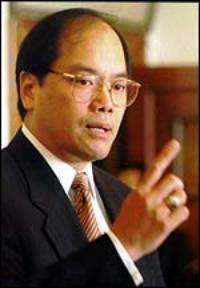
I am saddened to learn of the passing of my good friend Matt Fong, former California State Treasurer.  Matt was a model public servant, principled and committed to representing the peoples’ best interest.  A longtime leader in California politics, he was respected on both sides of the aisle for his hard work, dedication and sense of duty to all those he served.  He was a loyal friend and supporter and our thoughts and prayers are with his wife, Paula, and their two children during this difficult time.

Fixing the System for Those Most in Need

During these challenging economic times, governments across the U.S. are facing unprecedented challenges to their ability to deliver services.  Nowhere is that more apparent than in the nation’s largest county – Los Angeles County.  As the ultimate safety net for those most in need, we must examine our largest expenditures and determine how we can maximize scarce taxpayer resources.

Without question, the single largest growth in County expenditures is the General Relief (GR) program.  This is a state-mandated program that requires counties to provide assistance to indigent adults who do not qualify for other benefits.  As of December 2010, the County’s GR caseload consisted of 70 percent of the total statewide population receiving General Relief, making it more than 80 times larger than the GR caseload for Riverside, San Bernardino, and Orange Counties, combined.

On top of these already sizeable demands on our system, the economic crisis has increased the number of people needing our services, due to a foreclosure or job loss.  Many families are using County services for the first time, desperate for help.  We have seen our caseload soar: up 73 percent over the past three years, from 63,000 to 109,000, with a dramatic increase in costs to the County from $148 million to $219 million.

Behind these numbers lies another troubling statistic: nearly one-third of the entire GR caseload is not pursuing either employment or disability benefits, the two routes off of General Relief.  This cannot continue.

Currently, individuals on GR receive about $221 in cash and about $120 in food stamps per month.  For those seeking employment or disability benefits, nothing would change.  For those not pursuing either option and just receiving cash, we would substitute a $297 housing voucher. This motion is not meant to punish those who are currently on General Relief, but to put a stop to endless cash assistance for those who are not playing by the rules of the program.

Unfortunately, Los Angeles County also has an affordable housing issue. With some of the savings and reduced costs from the GR program that we expect to see given the experiences of other jurisdictions, we can help alleviate this housing problem.  The County would direct 50 percent of the cost savings into a newly established General Relief Anti-Homelessness Account, while the additional 50 percent would go into the County’s General Fund.

The County has historically worked proactively to get out in front of fiscal problems.  By restructuring the General Relief program, we have an opportunity to do just that.  The time to act is now, before further challenges brought forth by the state and the federal budget situation force decisions that would not benefit anyone, let alone the people most in need.

Working for You in Washington, D.C.

I am in Washington, D.C. this week with other members of the Board to meet with Congressional leaders and The White House to discuss the priorities and challenges facing Los Angeles County, the largest County in the United States. The key issues that we need addressed on this advocacy trip include urging the House to oppose the proposal to cut Medicaid by $1.4 trillion over ten years and turn it into a block grant to the states. This would disadvantage both California and the County’s most vulnerable low income populations and jeopardize the County’s health safety-net system.

Additionally, the County is seeking to preserve federal funding support for crucial local law enforcement and multiagency, regional disaster first responder capability, and employment and training services to tens of thousands of people across the County!

Check out some videos and photos from my trip so far:

Click here for photos from Washington, D.C.

Reshuffling Responsibility Will Not Fix the State Budget

Discussions like these are vital during a budget crisis like the one we are all facing now.  I know that my colleagues and I are committed to working with the Governor and the Legislature to manage the short-term impacts of this budget crisis, as well as looking at long-term solutions to how we provide critical services to the people of California and the County of Los Angeles.  We want to be part of that solution.

The centerpiece of the proposed 2011-12 State Budget is a realignment plan that moves more services under local control.  Let me be clear; I believe that services are best provided close to those receiving them.

I must, however, voice my concern that under the current proposal, the State is shifting full responsibility for billions of dollars in programs to counties, with only a short-term commitment of dedicated revenue to pay for them.

We are still gathering data and accessing the potential impact, but we must ensure that the realignment plan be feasible and sustainable.  Many of the services we provide are the final safety net for people in despair.

I am particularly concerned about this as it relates to public safety.  We cannot fund critical public safety programs with fluctuating funding streams.  The Realignment Proposal must include a Constitutional guarantee to provide counties with a permanent, dedicated and stable revenue source to fully support realignment for as long as counties retain these new program responsibilities.  These revenues must be guaranteed beyond the five year period currently being proposed.

As I said, we want to work with the State, but we can’t do so at any cost.  We must all work together to find creative solutions to how services are provided and some of these ideas may require the State making changes and allowing more flexibility at the local level.

For example, it would be very helpful if the Legislature were to look closely at some of the mandates on counties that are already in place, and see what can be relaxed or even eliminated.

Let me give you a few potential solutions: if you were to eliminate the “State-only” Medi-Cal rules governing the Mental Health Managed Care program, counties would be able to access additional federal reimbursement for Medi-Cal outpatient psychiatric services.

Also, if the Drug Medi-Cal program could be reconfigured to allow us to screen clients rather than just push everybody into services, it would relieve the administrative burden significantly and we would still be able to serve those who need treatment for substance abuse.

In another area, if legislative measures could be taken to ensure counties have greater access to SB 81 bond funds for youthful offenders and you could relax the match requirements, the risks in taking on the high-risk juvenile offenders – which I still think is very problematic – could be somewhat mitigated.

A big concern I do have is around foster care.  There is a new mandate imposed by the State under AB 12 that would require us to serve foster youth until the age of 25.  It’s a well-intended vision, but the cost for doing this is still being evaluated and won’t be released until later this year.  I think we should consider holding off on this until we understand the full costs, which could be well beyond what we would receive for foster care under this Realignment proposal.

Those are just a few ideas that we have had – and I hope they illustrate our commitment to working together.  Digging out of this hole won’t happen with the State or the counties digging their heals in the ground.  We all need to share ideas, give and take, and above all, listen.

State of the Union: What It Means for Transportation in Los Angeles County

This week I had the pleasure of joining officials from Metro on a trip to Washington, DC to meet with members of Congress, the Senate, FTA, USDOT, and other transportation authorities to help advocate for new Metro projects in the Los Angeles County region. While on the trip, I had the incredible opportunity to attend President Obama’s State of the Union speech. In it, the President called for increased investment in infrastructure throughout the Country.

President Obama is committed to redoubling efforts to fund important infrastructure transportation projects and rebuilding our crumbling infrastructure. In fact we have our own aggressive plan to accelerate our most important projects through our 30/10 Initiative which has us moving projects to completion in this decade.

Metro remains committed to working with both Congress and the Obama administration in the months ahead as Los Angeles County stands poised to deliver vital transportation improvement projects to this region. We couldn’t agree more that projects selected for funding be projects that are best for the economy and job creation.

The voters of Los Angeles County have voted three times in the last three decades to tax themselves in order to improve mobility in the region. Working together, we can embark upon an aggressive transportation infrastructure improvement program to meet those goals.

View some photos of my trip to Washington, DC to advocate for transportation projects in the Los Angeles region.