Knabe’s Corner

Dispatches from the Supervisor

Labor dispute at Ports has far-reaching consequences

As you read this blog, an armada of more than two dozen cargo ships sits just off the California coast—unable to unload cargo at either of the two busiest seaports in the United States, because of a labor impasse between the Pacific Maritime Association (PMA) and the International Longshore and Warehouse Union (ILWU).

When operations at the Ports of Los Angeles and Long Beach come to a halt, small-business owners, suppliers, and consumers around the world suffer. Medical supplies cannot reach patients at hospitals, car parts cannot reach manufacturing facilities, and furniture and clothing cannot reach retail stores—potentially costing the national economy nearly $2 billion a day in lost activity.

As the cargo ships remain parked as far as the eye can see, we need to be concerned not just about the impact today, but about losing future business at the Ports. Smaller, rapidly growing seaports in Canada, Mexico and other regions of the United States, threaten to take advantage of the labor strife and slowdowns, and will incentivize shippers to take their business elsewhere. Once we start losing customers at the Ports, it will become incredibly difficult to win them back.

This labor dispute, which has already cost the local economy millions, has far reaching consequences that will severely impact the economic livelihood of our country. The PMA and ILWU must come to a resolution soon, so that the two largest seaports in the Western hemisphere can get back to work.

Keep the L.A. Air Force Base In L.A.

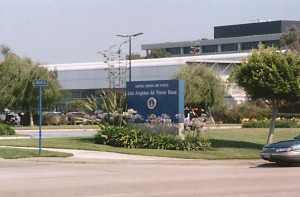
During budget season at the federal government, you can count on two things: partisan bickering and the threat of consolidating or closing armed forces bases.  And so it is again this year, with rumors swirling around the possibility of either closing or relocating the Los Angeles Air Force Base (LAAFB). While there has been no official announcement, I am deeply concerned about the impact this change could create – both in LA County and on the national stage.  That is why our local leaders must be proactive in keeping this historic base in El Segundo, where it belongs.

While LA is often associated with entertainment and celebrity, our region actually serves as a key hub to our nation’s defense. Over 5,000 people are employed directly by LAAFB, and it creates another 11,700 jobs locally. Additionally, some of our greatest aerospace and defense companies, which depend on supporting  this base, are just miles away. And our county’s community colleges and universities graduate more engineers than anywhere else in the nation, serving as a fabulous pipeline of talent to this local defense infrastructure.

To relocate these military, civilian and contracted employees would not only disrupt our own county, but also the base’s role in our nation’s defense. Inside LAAFB is the country’s highly prized Space and Missile Systems Center (SMSC), providing our military with sophisticated intelligence gathering with space-based surveillance, communications, navigation and meteorology. This technology and the people who work in the SMSC have delivered amazing results during recent wars, and more than ever, we need to rely on these individuals and technology to protect us from the threats we face around the world today.

Together, the LAAFB and SMSC are critical assets to LA County’s economy and our nation’s security. I am asking that the mayors of all 88  cities in Los Angeles County write letters to the secretaries of Defense and the Air Force, to ensure they understand LAAFB must stay in the South Bay. The LA economy will benefit. And most importantly, the nation will benefit by keeping LAAFB in LA.

No such thing

Three years ago this month, two women probation officers from our County Probation Department came to me about a growing issue they were seeing across our region – the sexual exploitation of young girls for profit.  Like many people, I thought child sex trafficking was occurring in a third world country, not in our community.

Since that time, I am proud of the work we have done to raise awareness, create wraparound services for the victims and increase penalties for those who buy and sell children.  I am grateful to the local law enforcement agencies, non-profit organizations, businesses, and state and federal legislators who have supported us every step of the way!

This weekend, I attended the City of Long Beach’s first Youth Exploitation Safety Symposium, hosted by the Long Beach Human Trafficking Task Force. The City of Long Beach, its police department, non-profits and community organizations, as well as students and parents have become a national model for combating the sexual exploitation of children at a local level.

This powerful PSA was shown at the symposium, and was filmed using students from Long Beach Polytechnic High School who declared themselves not for sale:

Long Beach and other local municipalities are making progress, but we know we have much more work to do.  In 2015, I am focused on the “demand side” of this horrific crime.  We cannot just support the victims, we must stop the exploitation, which begins with exposing and punishing those who buy girls for sex.

I’ve met many young victims and heard the horror stories of what they endure when they are forced into this life.  I have also met many remarkable survivors and I am always struck by their fiery spirit and hope for a better life.

We can all play a role in supporting these young people and ending this exploitation.  How we view this crime and the victims begins with how we speak of them.  So it’s time to change the language.

Last week, I sent a “No Such Thing” bracelet to over 150 local, state, federal, non-profit and business leaders, to encourage them to remove the word “prostitute” and “child prostitute” from their vocabulary.

There is “No Such Thing” as a child prostitute.  Children who are forced to sell themselves night after night on a street corner are not prostitutes.  Children who are brutally beaten by their pimp for not making a quota are not prostitutes.  Children victimized and sexually exploited by grown men are not prostitutes.  There is simply “No Such Thing.”  They are victims, manipulated emotionally and physically into a hellish life.

It’s time to end the sexual exploitation and say: No more. Not in our streets. Not to our young girls.

New Horizons Caregivers Group serves food to the poor and inspires educational dreams

There are nonprofits designed to deliver food to those in need, and there are nonprofits dedicated to promoting education. New Horizons Caregivers Group (NHCG) has managed to find a unique way to serve both missions.

Based in Hacienda Heights, NHCG was formed in 2003 by Bob and Cathy Jamieson. Bob, who retired from a previous Pasadena nonprofit at 64, decided he wanted to launch his own volunteer organization to help others in his retirement years.  So the husband-wife duo started researching. When they asked the local school district about the biggest problem they faced, officials stated it was challenging to get certain pockets of low-income kids to regularly attend school.

Some parents would keep children home to help babysit younger siblings, and others would hold a child out to support dad’s gardening business if he got behind on jobs.

“There are so many low-income parents and single parents struggling to keep roofs over their heads, gas in their cars and provide meals throughout the week for their families,” said Cathy. “Still, we wanted these same parents to know how important it is to help their kids get the homework done, get to school and get a good education.”

So, the Jaimesons built their mission around helping low-income parents and at-risk children to see the value of education as a means to end poverty.

NHCG’s signature program, FIESTA, stands for Family Incentives Equals Students Taking Action. It incentivizes low-income parents with elementary school children to attend educational parenting classes hosted by the school districts. When the parents show up to one of these classes, they receive a bag of groceries and school supplies valued at $65 to $100.

“The parents walk away with food and supplies for their families to support their meager incomes, but the hope is they also learn some valuable insights about the importance of their child’s education, and how they can support their kids in school,” said Cathy.

The school district takes the lead in orchestrating the monthly parenting classes, while NHCG focuses on securing the free food, goods and school supplies. Hundreds of new backpacks are filled at the start of each school year, and essentials are added throughout the months to ensure students also have the necessary tools and resources to complete special projects and assignments at home.

During the winter months, NHCG secures toys, shoes, blankets and other goods to help families in need around the holidays.

“We partner with Costco, local grocery stores and other retailers who have excess food or product that would otherwise go to waste,” said Cathy. “It has been so great for us to make these connections to end the waste and at the same time help people in need.”

The NHCG often receives letters from appreciative families who have fallen upon hard times.

“Just last week we received a letter from a mother who received some Christmas items from us,” said Cathy. “Her husband was recently laid off and we were able to give her two girls and family some toys and food for the holidays. She wrote to tell us about how grateful she was and what a blessing we were during these difficult days.”

In 2014, NHCG hit $5 million in donated goods to the local community, and the plan is to continue to serve. This year, Cathy said they are supporting five local elementary schools, which equates to serving 200 to 225 low-income families each month.

Results have proven that getting parents involved and giving free products helps the family budget, the children, school attendance, grades and the overall attitude about learning and their school community.

“Encouraging our parents to get in engaged in their child’s education and providing them with free groceries and supplies is a win for our district and a win for the families,” said Anthony Duarte, school board president of the Hacienda La Puente Unified School District. “New Horizons Caregivers Group is providing an invaluable service to the students and families of our school district.”

To learn more about NHCG, visit www.nhcg.org.

Long Beach Ronald McDonald House provides comfort to families in need, pride in the community

For three years, Bonnie and Eric Hendrickson made the long trek from their home in Murrieta, Calif., to Miller Children’s and Women’s Hospital Long Beach, helping their young son, Andrew, battle Cystic Fibrosis. Bonnie settled into the hospital 24/7, never wanting to leave her son’s side. Eric spent as many waking hours with the family as possible, but ultimately needed to sleep in his car in the evenings since hospital rules dictated only one parent could stay overnight.

“The 160-mile daily roundtrip was simply not an option,” said Eric. “So we just did what we needed to do for our son – I slept in our suburban and Bonnie stayed with Andrew.”

Daily treatments and special equipment required Andrew to stay in the hospital for four weeks straight, and then the family would drive home for a six-week reprieve. Four weeks in. Six weeks out. Four weeks in. Six weeks out.

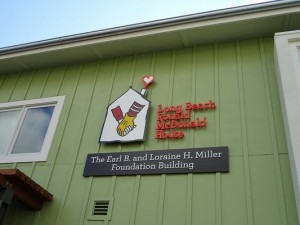
But in December 2011, the Hendrickson’s lives changed. Andrew still required treatment, but the opening of the Long Beach Ronald McDonald House meant the family would now have a “home-away-from-home” as they cared for their son.

“The house made our lives so much better during a very trying time,” said Eric. “I had somewhere to sleep during those weeks when Andrew needed treatment, and Bonnie could come over for stretches to get cleaned up and grab a little rest as well. The house, the staff, and the other families gave us a place to recharge so we could be our best for Andrew.”

These days, the Hendrickson’s only occasionally rely on the house since Andrew is doing much better after a lung surgery, but there are many other families in need of similar services.

On any given day, the Long Beach House accommodates 50 or more individuals, supporting families of children undergoing treatment for cancer and other life-threatening illnesses at Miller Children’s Hospital and other nearby hospitals and medical facilities in Los Angeles County and Orange County. Some family members stay for just a night, others for several weeks, but the top goal of the staff and facility is to always ensure families far from home have the resources they need in order to best care for their sick child. To date, the House has already served more than 4,500 people in its three-year history.

“We want every family member to feel welcome during their stay,” said Cheri Bazley, Executive Director of the Long Beach Ronald McDonald House. “We really strive to provide special amenities – sibling support, complimentary robes and slippers, a locked pantry to store dry goods and an individual refrigerator – those small things give families a sense of home.”

And Bazley admits the Long Beach community has stepped up in ways big and small to support as well. The Long Beach Convention Center and Visitor’s Bureau adopted the House in its first year of operation, inviting all of its members and clients to provide meals. Between local hotels, restaurants and various organizations, dinners were covered for families almost every night of the week.

“In 2015, we already have 390 meals committed for our families,” said Bazley. “Beyond the food, dinner is a great way families can meet up in a communal space and connect over what they are going through and engage in some normal conversation.”

The organizations coming to serve also benefit from the experience.

“These groups are able to volunteer and see where their help is going,” said Bazley. “They provide a beautiful meal and share some time with the impacted families – they love it!”

While the House asks families to pay just $25 to $35 per night, the average cost of sustaining the House is $125 per family, per night. In order to make up the difference and continue supporting families in need, the Long Beach Ronald McDonald House relies on philanthropic gifts.

One of the greatest fundraising opportunities, the annual Walk for Kids, will be held on April 12, 2015.

“This one event raises $300,000 in just one day for our House,” said Bazley. “There are so many ways to get involved – you can walk, make a financial pledge, volunteer to help at the event – we are always in need of extra hands.”

Planning meetings and more details will be available soon.

“I’ve walked with my own family in this event and it really is a great opportunity to support a wonderful organization in Long Beach, and also see families and children firsthand who have benefited from the services of the Long Beach Ronald McDonald House,” said Supervisor Don Knabe.

To learn more about the Long Beach Ronald McDonald House, and discover how you can volunteer or utilize the home, visit www.longbeachrmh.org.


Venice Dual Force Main Project: City must consider Marina del Rey residents

As the Los Angeles County Supervisor of the 4th Supervisorial District, which is home to over two million residents and includes Marina del Rey, I continue to have grave concerns about the City of Los Angeles’ chosen alignment for the Venice Dual-Force Main.  The City’s preferred alignment, which will go through Marina del Rey, will have a significant impact on the Marina’s 9,000 residents, and on the more than one million tourists that visit the Marina every year.

While I understand the need for redundancy in the sewer line, the sheer volume of traffic on Via Marina (16,000 daily traffic trips) versus Pacific Avenue (5,500 daily traffic trips) means that the City’s preferred alignment will negatively impact many more people.

I will continue to oppose the Venice Dual Force Main Project unless there are satisfactory mitigation measures along with a concerted public outreach effort to address and minimize project impacts on County residents and Marina visitors and to keep all affected residents informed.  Possible project impacts include, but are not limited to, noise, traffic and vibrations, all of which can be amplified based on chosen working hours.

I am aware that County staff from the Departments of Beaches and Harbors, Regional Planning, County Counsel and Public Works, have expended considerable resources to address the impacts that the City’s project will have on the Marina, and I urge the City to cooperate with County staff in those efforts.

While I recognize the City’s right to choose any necessary or convenient location for the project (as determined by the Court of Appeals in 2013), it is my sincere hope that, as a good neighbor, the City will seriously consider and sincerely address the significant project concerns raised by the County, its Marina del Rey residents and other stakeholders.

Celebration of life for Catalina Harbor Patrol Officer Tim Mitchell

Last week, I attended the Celebration of Life Service for Harbor Patrol Officer Tim Mitchell in Catalina, who was tragically killed in the storms that struck Los Angeles County last week. The service was a poignant reminder of how our safety personnel put their lives on the line for all of us, each and every day. Please keep Tim’s family in your thoughts and prayers.

Thoughts on thankfulness

As we celebrate the holidays, we often get caught up in the stress of buying gifts, preparing for guests, and hosting parties.  Very often, we lose sight of what is really important, the time we should cherish with our families and loved ones, and giving thanks for our many blessings.

Too often we take for granted the freedom and safety we have in our country.  Many people around the world do not share this blessing; even young children cannot go to school without risk, as we have seen recently in Pakistan and Nigeria.  Here in the United States, we are able to celebrate our beliefs and go about our normal lives because of the men and women who wear the uniforms of our armed forces and our public safety agencies.

At a time when we should be giving them our gratitude and thanks, politics and the 24-hour news cycle too often pull us apart, making many feel they have to “take sides.”  Most recently, we have witnessed protests across the country surrounding tragedies in Ferguson and New York City.  While most people have protested peacefully, they have been eclipsed by the senseless acts of a few – from looting and vandalism, to the horrific point-blank murders of two police officers in New York.

There should be no sides to take here.  The peaceful protestors have a right to ask questions and raise issues about these events.  This should be done in the context and acknowledgement of the bravery and dedication of the thousands of men and women who protect our streets and communities across our nation.  We should also be grateful to their families, who every day wonder if their loved ones will return after their shift.  Most of us don’t face that when we go to work; we don’t knowingly put ourselves in harm’s way, risking our lives each day for strangers.

As we celebrate the holidays, let’s take a moment to give thanks to those who guard our streets, patrol our communities and keep us safe.

Best wishes for a happy and healthy new year!

Didi Hirsch evolves mental health services in L.A. County, growing access to youth and families

Mental illness is not only for adults. In fact, three out of four people with mental illness will receive a diagnosis by age 24.

Didi Hirsch Mental Health Services, a nonprofit agency that helps over 90,000 children and adults from 11 sites and nearly 100 schools each year, has several programs that help teens and young adults with mental illness and substance use disorder. They include outpatient programs, a youth substance abuse program, school-based services and a “Birth-to-Five” program.

“Suicide is the second leading cause of death for people between the ages of 15 and 24,” said Dr. Kita S. Curry, President and CEO of Didi Hirsch Mental Health Services. “We can save a lot of lives by making sure young people with depression and other mental health conditions get the help they need.”

Research shows early diagnosis and appropriate services for children and their families can make a significant difference in the lives of children with mental disorders. Antonio G., 16, who started receiving mental health services at Didi Hirsch when he was eight years old, illustrates how.

Antonio began displaying symptoms of severe anxiety when he was six years old. The anxiety kept him from sleeping in his own room, attending school and participating in family activities. Even basic hygiene was a problem, since he was fearful of taking a shower.

Antonio’s school referred him and his family to Didi Hirsch, where they began receiving individual therapy, family therapy, case management and psychiatric services. Although Antonio and his family received help at a Didi Hirsch outpatient clinic, Didi Hirsch counselors are also posted at nearly 100 schools throughout Los Angeles County so students can receive vital mental health care services even if their parents are unable to take off work or have no way to transport them to a clinic.

Today, Antonio still experiences symptoms of mental illness, but now has tools to cope.

“My anxiety has gone really down,” he said. “It used to hold me back, but now I’m able to do stuff that I couldn’t before like speak up in class, talk to new people, and join in activities like the youth group.”

With just a phone call, intake counselors and licensed program coordinators can assess a family’s needs, schedule an intake appointment and provide referrals for community resources.

Therapists work with children and teens experiencing emotional and behavioral difficulties and provide support, crisis intervention and evidence-based mental health treatment to help students be successful at school, home and in the community.

Teens can also get help from Didi Hirsch’s Suicide Prevention Crisis Line, which is open 24/7 in English and Spanish, or from its Crisis Chat services, which is available every day from 4:30 p.m. to 12:30 a.m. Didi Hirsch also answers calls and chats for the TeenLine during the 20 hours a day when trained teens are unavailable to take calls.

Didi Hirsch’s “Birth-to-Five” program focuses treatment on new mothers suffering from depression, young toddlers who excessively tantrum, and kids who exhibit especially aggressive behaviors.

“All families are on a journey,” says Lisa Schumacher, program director of Didi Hisrch’s Mar Vista Center. “Sometimes rocks are on the path that we can move ourselves, and sometimes we need help to move the rocks – they are just too big. When families come across those large boulders, Didi Hirsch is there to offer suggestions, support or resources.”

Didi Hirsch primarily relies on Medi-Cal to pay for services, but has some funds to support the uninsured. To learn more about how to access services from Didi Hirsch, individuals can call (888) 807-7250 or visit http://www.didihirsch.org.

Long Beach BLAST illustrates the power of academic mentoring

Nancy Connor, executive director of Long Beach BLAST (Better Learning for All Students Today), can easily rattle of the benefits of academic mentoring for an at-risk youth. Self-esteem goes up. Grades soar. Hope is found – sometimes for the first time.

But she is also quick to point out the “ripple” effect.

“Our academic mentors often get more out of the relationship than the mentees,” said Connor. “I see college students come into our program and volunteer – sometimes for the first time in their lives. They are amazed by the difference they can make with a child when they offer their time and open their hearts to a younger student they meet.”

Each semester, the team at Long Beach BLAST quickly and strategically assembles an estimated 250 to 300 mentor and mentee relationships (1:1), matching students from California State University Long Beach, California State University Dominguez Hills, Long Beach City College and Los Angeles Harbor College with at-risk youth in Long Beach schools.

“It’s a pretty intense screening process,” said Michelle Olmstead, BLAST’s volunteer program coordinator. “We start by visiting college classrooms early in the semester to educate students about BLAST, bring new volunteers through the application, screening and training process, and then ultimately match the college students with a student who may be struggling academically, pressured by gang involvement and living at or under the poverty level.”

Simultaneously, BLAST partners with the Long Beach Unified School District, including their principals, counselors and teachers, to identify young students who could benefit from an academic mentor. Help could come in the form of tutoring, teaching organizational skills or simply offering a role model to chat with about how to apply to college or get a job.

After college-student volunteers complete a background check, are medically cleared and attend a three-hour training facilitated by the BLAST staff – all in a matter of three to four weeks – they are matched and ready to begin. Mentors connect with their mentees for at least a semester, either in the classroom or at approved after-school programs located throughout Long Beach.

While some college students are drawn to the BLAST organization for community service hours or a particular college class requirement, many exit the experience with a new appreciation for volunteering.

Lucy Chairez, now a BLAST employee, started her academic mentoring journey with the Long Beach nonprofit in 2012 as a student at Long Beach City College. Partnered with a 17-year-old Will J. Reid High School student, Chairez initially focused her attention on helping with homework and tutoring, but the mentor-mentee team quickly found a deeper connection. In fact, Chairez signed up to continue mentoring the same student for a second semester and was able to see her through high school graduation.

“Now that she’s 18, we keep in touch, grab coffee and just talk about life in general,” said Chairez. “I just helped her select books for her next semester at Long Beach City College, and she often asks me to look over assignments for a second opinion.”

Today, BLAST continues its journey, operating two core programs: The Academic Mentoring Program, and the Bridge to Success Program, are both designed to support students’ immediate academic needs and future aspirations.

“We’d love to evolve to offer select students the option to do more long-term mentoring,” said Leslie Keeney, BLAST Program Manager. “We are so fortunate to have such amazing college students from the Long Beach community to help these young students. They are strong, education-driven role models, and to many of our students, they instill hope for a brighter future.”

BLAST is accepting contributions for its 2014 year-end giving campaign, which will directly support the Academic Mentoring Program and Bridge to Success Program. Please visit www.lbblast.org and click “Donate to BLAST” under “Support our Cause”.

To learn more about BLAST, visit www.lbblast.org or call 562-437-7766.